

Hyponatremia Protocol
Diagnosis and management of hyponatremia in the ICU. Two questions drive everything: how sick is the brain right now, and how fast is the sodium allowed to rise. Treat severe symptoms immediately with hypertonic saline, classify by the four-question workup, then correct slowly — guarding against osmotic demyelination at every step.
1


ARDS Management Protocol
Management of ARDS in adults. The mortality benefit comes from a small number of proven interventions — lung-protective ventilation, prone positioning, conservative fluids, and ECMO for the most refractory. Confirm the diagnosis (Global 2023 / Berlin), stratify severity, and follow the A→C ladder.
0

ABCDEF Bundle
A coordinated daily approach to liberate ICU patients from pain, oversedation, delirium, and immobility. The elements reinforce each other — pain control enables lighter sedation, lighter sedation enables awakening and breathing trials, which enable mobility and engagement. Perform every element, every patient, every day.
0


Therapeutic Temperature Management
Post–ROSC neuroprotection for the comatose survivor of cardiac arrest. Pick a target and hold it, suppress shivering aggressively, protect MAP and oxygenation, then rewarm slowly and prevent fever to 72 h. Defer all neurologic prognostication. Adapt every target to your institutional protocol and the individual patient.
0

Determination of Brain Death Protocol
Determination of death by neurologic criteria (BD/DNC). A diagnosis with profound consequences — work the sequence in order: confirm prerequisites and clear all confounders before the exam, perform the clinical exam and apnea test, and use ancillary testing only when the exam or apnea test cannot be completed.
0
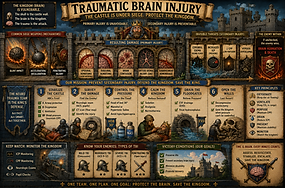
Traumatic Brain Injury
Trauma-bay-to-ICU management of moderate–severe TBI. Stop the secondary injury — avoid hypoxia and hypotension from the first minute, keep CO₂ and perfusion in range, and escalate ICP therapy in steps. Grade by post-resuscitation GCS, image early, and get neurosurgery in fast.
0


Increased Intracranial Pressure
ICU management of intracranial hypertension and herniation. Work the ladder in order — optimize universal neuroprotection (Tier 0) before escalating, treat sustained ICP > 22 mmHg, and protect cerebral perfusion at every step. Reserve hyperventilation and barbiturates for rescue.
0


Neutropenic Sepsis
An oncologic emergency. Draw blood cultures from every lumen and a peripheral site, then give the first broad-spectrum antibiotic within 60 minutes — never wait on the workup. Layer MRSA and double Gram-negative coverage onto an antipseudomonal backbone by risk, support the failing circulation, and engage ID and Heme/Onc early.
0
- 9Page 3
